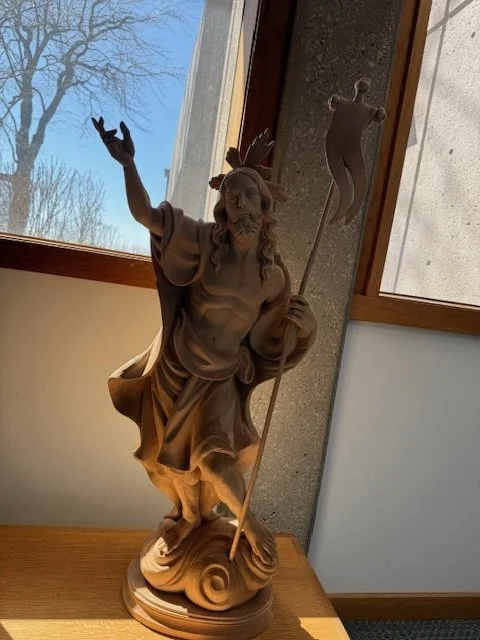
Easter Homily

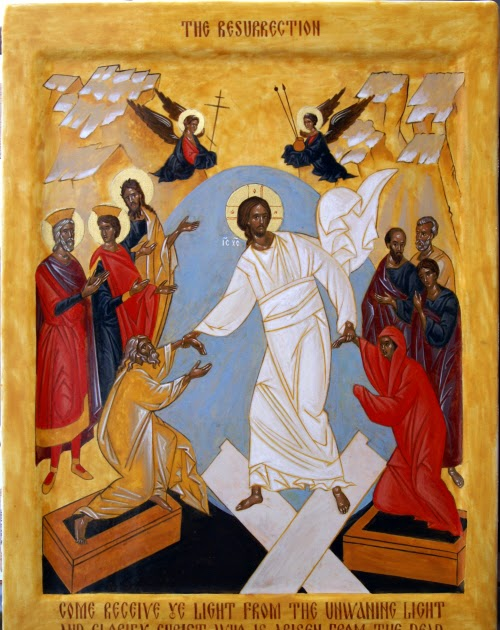
So here we are, early in the morning, at the tomb. The stone is still there, the grief is still there, and it seems like the story is over.

Mary Magdalene and the other Mary aren’t going to the tomb expecting a miracle. They’re carrying loss, confusion, and the kind of heaviness we all know.

Then everything changes.

The earth shakes, the stone is rolled away, and suddenly what looked final, isn’t.

There is something here we really shouldn’t miss, the first people to witness this, the first ones entrusted with the news that Jesus is risen, are women.

In their time, their voices didn’t carry much weight. And yet God chooses them first.  - That tells us something important.  This tells us God doesn’t work the way the world works. God sees differently, chooses differently.

This is still true TODAY.  This still matters today. We’re still figuring out how to listen to the right voices, how to honor people’s dignity, how to not overlook those on the margins.

The resurrection begins with people who simply show up in love.

The angel says, “Don’t be afraid… He’s not here. He’s been raised.”

The Marys are invited to see, and then they’re sent: go and tell.

So, they run off with what I can imagine was a mix of fear and joy. That feels right, doesn’t it? There’s a lot in our world that brings fear, uncertainty, division.

But there’s also real joy, because God is still at work, because death doesn’t get the last word.

But as the ladies are headed to fulfill the task they have been given, Jesus meets them.

Right in the middle of it all. Not when they’ve figured everything out, but while they’re still processing the whole thing, still running.

Jesus says: “Do not be afraid.”

We too need need to hear that. A lot.  Just as the Angels spoke to the Shepherds, just as the Angel Gabriel spoke to Mary, just as God Spoke to Joseph in the Dream, and just as Jesus spoke to the disciples ;  Don’t be afraid!

The risen Jesus sends the ladies on their way to TELL the others.

That’s how the Gospel moves forward, someone carries the message. And it starts with the women the world might have overlooked.  The women who were just out to do the loving task of visiting the tomb of their beloved teacher and friend.  

Today, on this Easter Morning God is asking us to carry the message out into the world.

But God is asking us to see differently.  To listen better.  We are asked: Who do we over look??? 

We are asked to recognize hope where we thought there wasn’t any.  We are asked to discern the spirits.  What voices give life to the world?  What things and people give life?  What things or people spread discord and violence and hatred?  These last ones are not from God, are not part of the GOOD NEWS!

There are still plenty of tombs in our world, things that feel sealed, stuck, beyond fixing.  Tombs of hatred, discord, and violence and war.  Discrimination of minorities, people of color, the stranger, and of women.

But Easter says God isn’t finished.

Christ is risen. Hope is real. And it’s meant to be shared with all people… he died and arose ONCE…. And FOR ALL!

On this Easter Morning, as we celebrate this act of love, trust that Jesus will meet you along the way, in the in the Word, in the Eucharist and then go and tell the world by your words, but mostly by your lives, the Good News!  And above all “do not be afraid”.

Jesus has been raised!  Alleluia!

 ~ Fr. Adam Patras, OSB
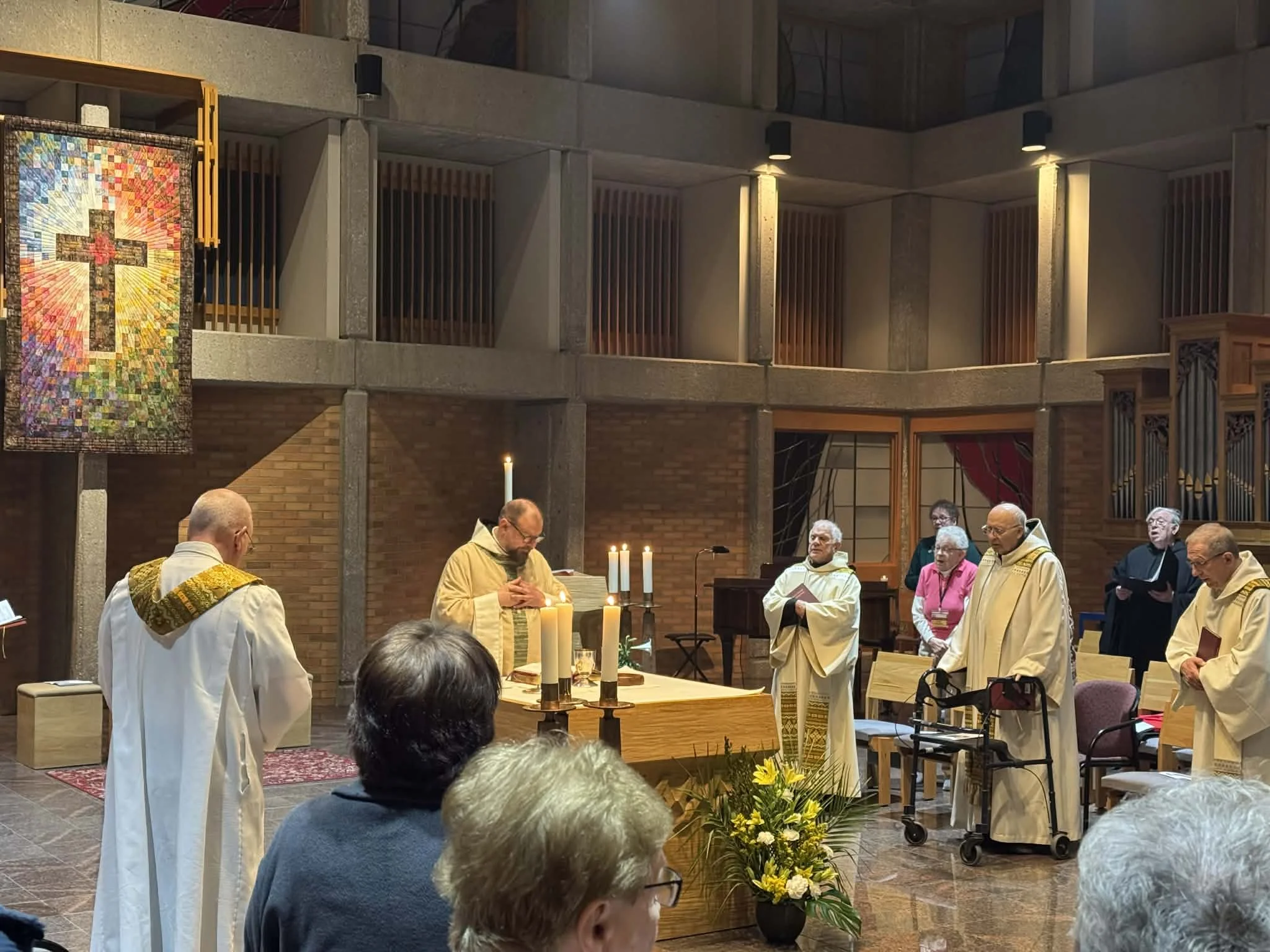
HOLY SATURDAY

Then comes Holy Saturday, a day unlike any other. The Church is quiet. The altar is bare. Christ lies in the tomb.

This isn’t  simply a day of waiting or preparation, but a day to sit with the reality of death, with absence, with grief. It’s a day when we are invited to stand in solidarity with all who know loss: those who mourn loved ones, those who live in the midst of war and violence, those who carry silent suffering in their hearts. On this day, we don’t rush ahead, we remain in the stillness, trusting that even here, CHRIST is at work in ways we cannot yet see.

~ Fr. Adam Patras, OSB

GOOD FRIDAY

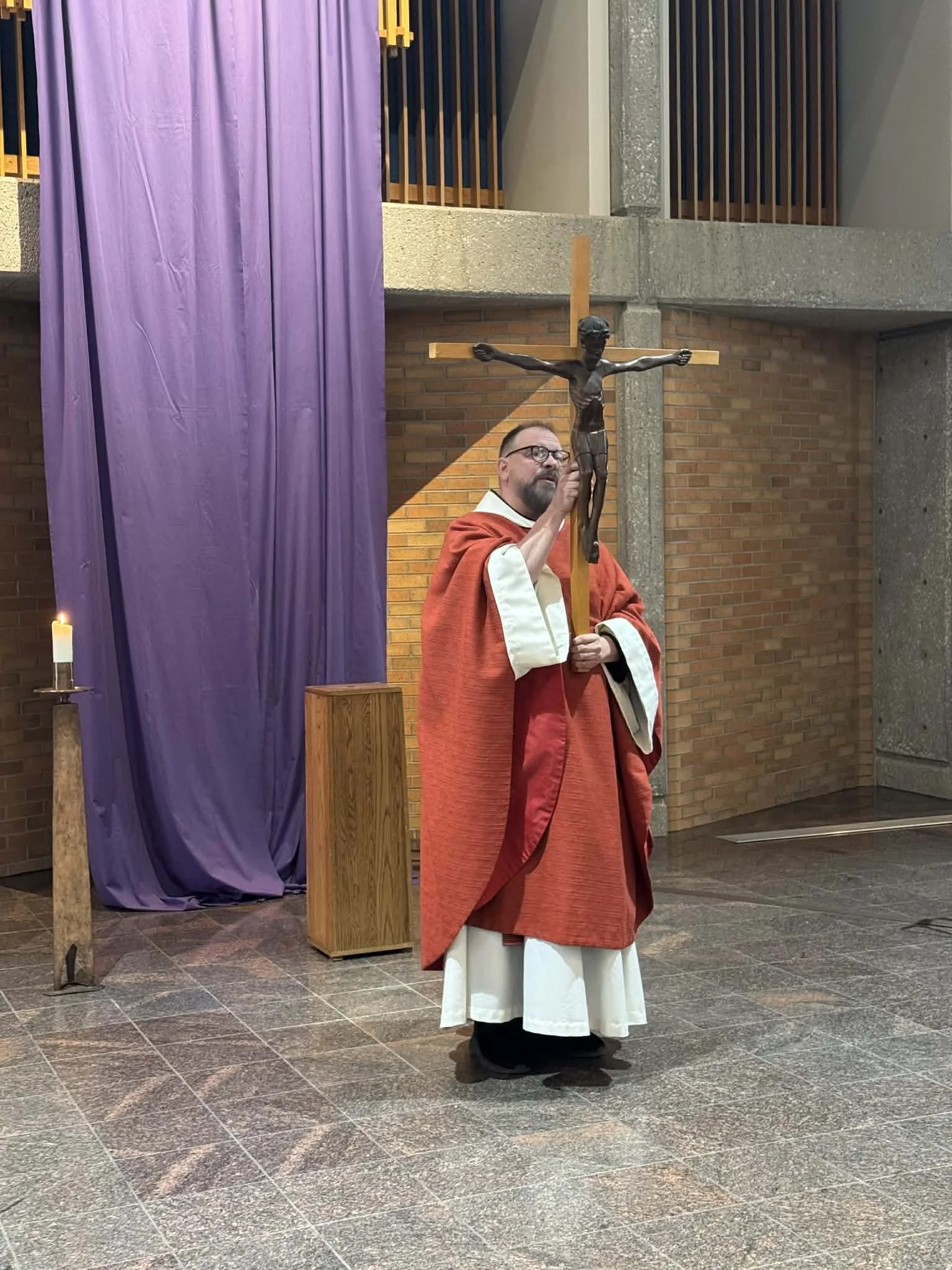
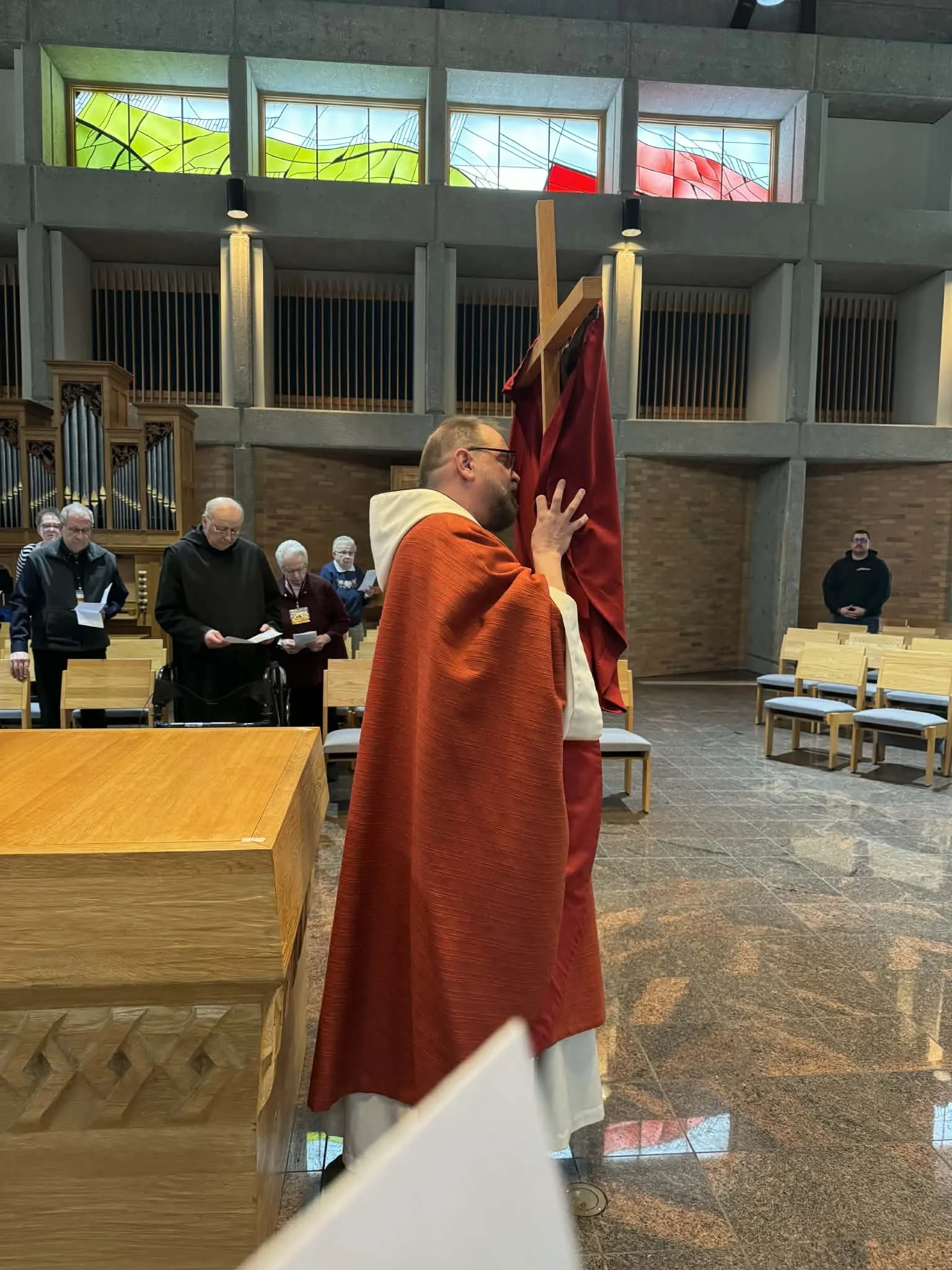
On Good Friday, we come face to face with the cross. We will venerate the wood of the cross, not as a symbol of defeat, but as the place where sin and death are conquered. In that solemn moment, we remember that Christ freely embraced suffering for our sake, and we bring to that cross all the suffering of our world, trusting that none of it is beyond His redeeming love.

~ Fr. Adam Patras, OSB

Join us for The Easter Triduum at Christ the King Priory (St. Benedict Center)

You are invited…

…to celebrate with the monastic community and retreat participants

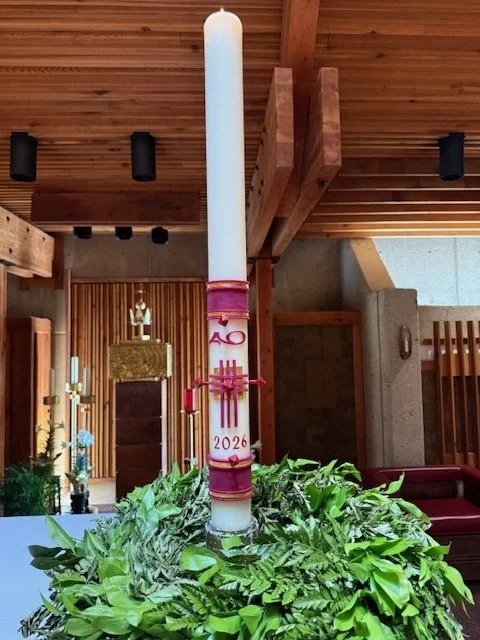
The Easter Triduum 2026

 at Christ the King Priory – St. Benedict Center, Schuyler, NE


April 2, 7:00 PM 
HOLY THURSDAY
Mass of the Lord’s Supper

April 3, 3:00 PM 
GOOD FRIDAY
The Celebration of the Passion of the Lord

April 4, 5:30 PM 
Holy Saturday
Evening Prayer for Holy Saturday
No Eucharist today

April 5, 5:00 AM                   
Easter Vigil
Easter Sunday of the Lord’s Resurrection
Please note: There will be no Mass at 9:00 AM        

All celebrations will be at St. Benedict Center, 1126 Road I, Schuyler, NE 68661.

1st Sunday Of Lent: Jesus Stands for Us!

In the first reading from Genesis, we see humanity at the very beginning. God forms Adam from the dust of the earth and breathes into him the breath of life. It’s a beautiful image! We are not accidents. We’re not random. We’re personally shaped and personally loved. God breathes His own life into us.

God sets humanity into the garden of paradise. “You may eat of every tree…except for the one in the middle of the garden”. Our story with God begins in generosity.

But the serpent introduces a question: “Did God really say…?” The real temptation is the suggestion that God is holding something back. That God cannot be trusted. That we must take matters into our own hands to be fulfilled.

And that is where the fall happens—not simply in eating fruit, but in doubting God’s goodness, God’s generosity.

In the Gospel today Jesus is in another garden, the garden of the wilderness. Forty days of fasting. Forty days of hunger and of vulnerability and it is in such times and places that the tempter appears.

But this time the story ends differently.

When tempted to doubt God, Jesus does not fall for the tricks, he trusts.

Turn stones to Bread.  Prove yourself!  TAKE POWER!!

Where our first parents fell, Jesus stands!

And here is the good news for us on this first Sunday of Lent: Jesus stands for us, with us.

Lent is not about proving how strong we are. It is not a spiritual competition. It is not about holding on tight till Lent is over. Lent is about learning to trust again.

Most of our temptations are not dramatic. They are subtle. They are a whisper:

“God isn’t coming through for you.”
“You need to secure yourself.”
“You deserve this.”
“Just this once won’t matter.”

“I am a holier monk than he is!  I am a better Christian than them.”

“They speak a different language so they cannot be trusted.”

But the Gospel tells us something joyful: temptation does not have to define us. Failure does not define us. Christ defines us.

The message is of HOPE!!  Jesus is led by the Spirit into the desert. The desert is not outside God’s plan. The struggle is not a sign that God has abandoned us. Most of the time it is where we grow strongest.

Life can be a desert for some, and Lent is a desert, but both are a desert walked with Christ.

When we fast or abstain from things, we are not punishing ourselves. We are saying, “God, You are enough.”


When we examine our lives, when we examine our thoughts and feelings, we are not checking a box. We are saying, “I trust in you God, to remake me in your image”
When we give to the poor and needy, we are living God’s generosity.

When we recognize the humanity in people who are different from us, we live the life he created us to live.

Every small Lenten sacrifice is a yes to God and  God’s original plan for us! A relationship of goodness and trust, a RELATIONSHIP of Love.

The Gospel story ends with angels ministering to Jesus. The desert is not permanent. Trust leads to strength, and relationship with God and leads to freedom.

Lent has begun, don’t be discouraged by temptation or failure. Expect it. But more importantly, expect grace. When temptation comes, it’s not an opportunity to prove yourself, but an opportunity to choose trust, an opportunity to stand with the one that stood, and stands with and for us.

This week, when something tugs at you: impatience, discouragement, self-reliance, anger, selfishness, racism, hatred, mistrust of the neighbor who is different, pause and say simply: “Lord breathe your life into me again!”

That pause could change everything!

Lent is not about the fruit in the garden or the stones in the desert, but about whether we will trust the God who has breathed His life into us.

~ Fr. Adam Patras, OSB

Ash Wednesday

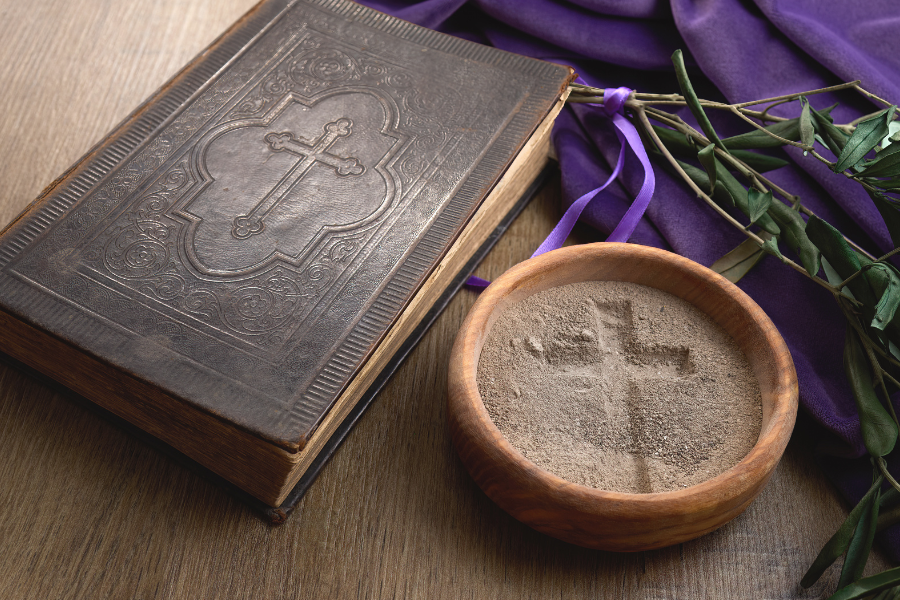
Today, on Ash Wednesday, we begin Lent not with guilt, not with dread, but with an invitation.

Listen to the tenderness in the first reading the prophet Joel: “Return to me with your whole heart.”

Not, “Return to me once you’ve fixed yourself.”
Not, “Return to me once you’ve proven you’re worthy.”
Just: RETURN

Lent is not about impressing God. It is about turning back.

Saint Paul tells us: “Now is a very acceptable time; now is the day of salvation.” That’s the good news. Not tomorrow. Not after we get our act together. Not after we’ve conquered our worst habits. Now.  

In Latin the word is Hodie.  TODAY…. NOW…. THIS MOMENT! God is ready NOW - Today.

In the Gospel, Jesus talks about prayer, fasting, and almsgiving. But notice something important. He doesn’t say if you pray. He says when. He assumes we want relationship with the God.  And Jesus tells us: do it in secret.

Why? Because Lent is not a performance. It continues the love story that is Christianity, the love story of being a Christian.  This last weekend we had a group at the retreat house ofRetrouvaille.  It is a program to help troubled married couples.  Lent is kind of our Retrouvaille with God. 

Non of us are perfect, none of us doing everything right, but we have chances every year, EVERY DAY to work on our relationship with God and with those around us.  If you think you are perfect, see me after Mass and we will have a talk!  😊

In a few moments we will hear the words:
“Repent and believe in the Gospel.”

It is an invitation to trust the good news,  if you remember GOSPEL means GOOD NEWS!!

Repentance doesn’t mean beating ourselves up. In Scripture it means turning around, changing direction. We turn not because we are rejected, but because we are wanted.

Joel says, “Rend your hearts, not your garments.” In other words, don’t just make outward gestures, let God reach your heart. Let God soften what has hardened. Let God heal what has grown tired. Let God rekindle what has cooled.

The beautiful thing is, that God is eager to do this. Joel says God is “gracious and merciful, slow to anger, rich in kindness.” That is the God we are returning to.

Lent, then, is not forty days of spiritual misery. It is forty days of clearing space, cleaning house. Space so God can love us more deeply.  Space so we can learn to love God, but especially OTHERS more deeply. Space so joy can return.

It’s not about giving up chocolate.  It’s not about eating less.  It’s not about making promises we will not keep.  It is about repenting, turning, making things new, making them right.  Things like what Pope Leo invited us to do:  Fast from harsh words.  Turning our language into love and friendship.  Fast from judging others.  Turning our thoughts to love and service.

God who sees in secret sees all of it. And God delights in it.

Today, receive the ashes with hope. Walk into Lent with the intent to TURN BACK TO THE GOSPEL.   BELIEVING MEANS NOT JUST THINKING BUT DOING AS WELL! IT TAKES THAT TURNING!

We can have confidence that God will give us grace to repair where there has been less than Good News, and Love.

God already is near, waiting for us.

“Repent and believe in the Gospel”      GOOD NEWS!

~ Fr. Adam Patras, OSB
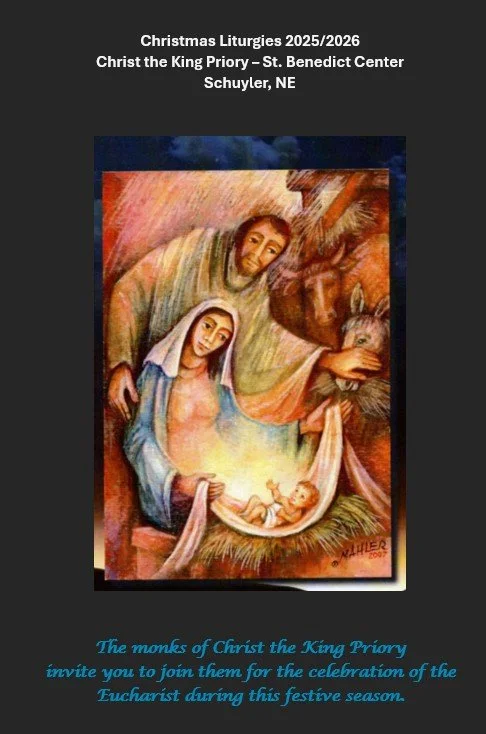
Saturday Reflection: Jesus Feeding the 4000

In today’s Gospel, a crowd has been with Jesus for three days. They are hungry, tired, and far from home. The disciples see a problem: there is not enough.
Jesus sees a possibility: someone must be fed.

Seven loaves. A few fish. A wilderness. Thousands of people.
From the perspective of the disciples, scarcity.
From the perspective of Christ, mission.

Jesus does not simply drop bread from heaven. He takes what the disciples already have. He blesses it. Breaks it. Gives it back to them, and they distribute it.

The miracle is not only multiplication.
The miracle is participation.

That is exactly why today the Church remembers Saints Cyril and Methodius.

They looked at the Slavic peoples and many Christians of their time thought: they don’t have the right language, the right culture, the right preparation.
Scarcity thinking.

But the saints saw what Christ sees: God already planted seeds there. So instead of forcing people to come to the Gospel’s culture, they brought the Gospel into the people’s language. They took what existed ( words, sounds, stories)blessed it, and handed Christ back to them in a way they could receive.

They trusted the same truth revealed in the Gospel today:
God does not wait for perfect conditions.
God multiplies what is offered.

We often think, I don’t have enough faith… enough patience… enough courage… enough holiness to help anyone.
But the disciples didn’t have enough bread either.

Christ never asks us for abundance.
He asks us for availability.

When we place our small kindness, our listening ear, our imperfect prayer, our limited energy into his hands, he feeds someone with it. Maybe a family member. Maybe a stranger. Maybe someone quietly starving for hope.

We receive Christ so that someone else may receive Christ through us.

At this Eucharist, the Lord again takes bread, blesses it, breaks it, and gives it, and then sends us out.

Like the disciples.
Like Cyril and Methodius.

What we have is small.
What Christ does with it is never small.

~ Fr. Adam Patras, OSB
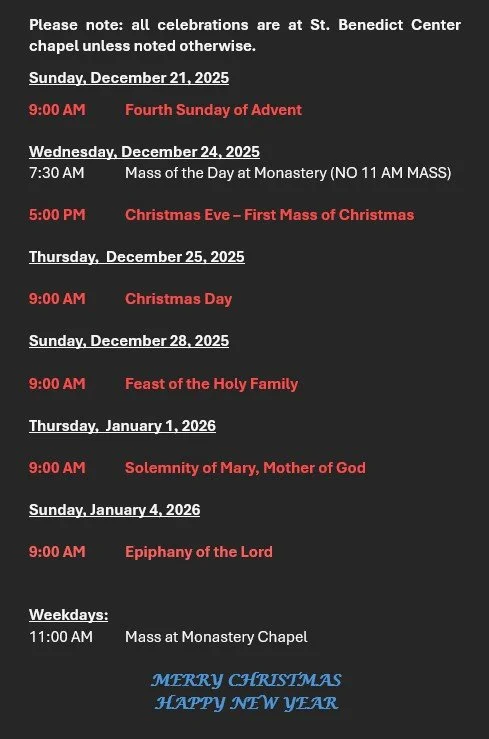
Christmas Day Homily - 2025

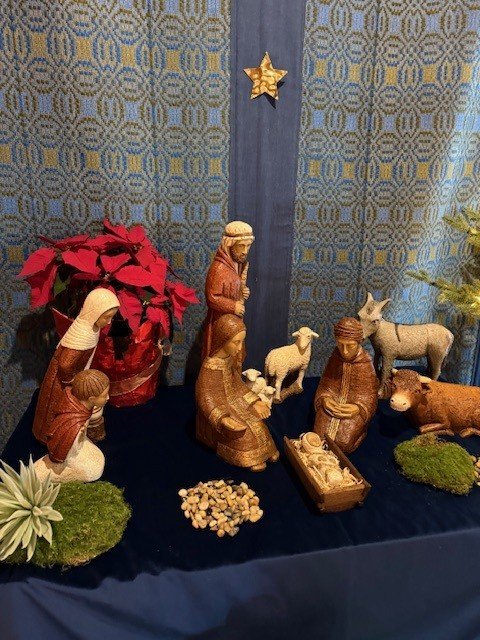
On Christmas morning, the Church gives us one of the most beautiful lines in all of Scripture: “The Word became flesh and made its dwelling among us..”  Not “visited.” Not “observed from a distance.” God pitched his tent among us. The translation is literally, “TABERNACLED WITH US.”

That image would have meant something very concrete to the people who first heard it. A tent is not a palace. A tent is temporary, vulnerable, and close to the ground. When you pitch a tent, you choose to share the same weather, the same dust, the same dangers as everyone else. And that is exactly what God chose to do.

At Christmas, God does not solve the world’s problems from heaven. He enters them. He pitches his tent in a world that is poor, politically tense, and unsettled. He is born under occupation, into a family with no security and no room at the inn. From the very beginning, God’s tent is set up among people who know anxiety, fear, and uncertainty.

That matters for us today. Because many people come to Christmas tired. Some are worried about the state of the world. Some are anxious about grain and beef prices, health issues, violence, division, or whether compassion still has a place in public life. Some are grieving or carrying private burdens no one else sees. Christmas does not deny any of that. It simply says: God is here.

God pitched his tent not among the powerful, but among ordinary people. Not in safety, but in vulnerability. Not in certainty, but in trust. Which means there is no human experience where God refuses to dwell. No boundary he will not cross. No darkness he will not enter. No life he considers unworthy of his presence.

And this changes how we see God. God is not distant. God is not impatient with our struggles. God does not wait for us to get our lives together before showing up. Christmas proclaims a God who moves in, who stays, who shares our condition from the inside.

It also changes how we see one another.

If God pitched his tent among us, then every human life becomes sacred ground. Every neighbor becomes a place where God is already dwelling. The child, the stranger, the immigrant, the poor, the forgotten—God has chosen to live there. To welcome them is to welcome him. To ignore them is to walk past the tent where God has chosen to stay.

Christmas morning is not about escaping the world for an hour of beauty. It is about seeing the world differently because God is in it. God pitched his tent among us—and he has never taken it down.

So today we rejoice.

Not because life is perfect, but because God is present. Not because all is calm, but because God is close. The Word became flesh and pitched his tent among us—and that means we are never alone.

That is the good news of Christmas. May it fill our hearts and give us hope.

~ Fr. Adam Patras, OSB


Midnight Mass Homily - 2025

For many years, Fr. Germar and Bro. Andrew, both of blessed memory, would re-entact at our Christmas Eve table the same game.  The question went out what song shall we sing?  Bro. Andrew would always answer, “Wer Klopfet an!” (Who is knocking!?) Fr. Germar always sang the bass part of the Inn Keeper.  The song depicts Joseph and Mary looking for a place to stay for the night, and the Inn keeper asking many questions, and finally turning them away. 

Tonight, in the quiet of this holy night, the Church dares to proclaim something astonishing:
“The people who walked in darkness have seen a great light.”

Not armies.
Not policies.
Not power.

But, a little child brings the light.

Tonight, when the world is still, when fears grow louder and divisions seem deeper, God does not shout. God whispers. God comes not as a ruler demanding entry, but as a child needing welcome. The Gospel is familiar: Mary and Joseph arrive in Bethlehem, tired, displaced, and unwanted. “There was no room for them in the inn.” The Son of God is born not in safety, but on the margins, laid in a feeding trough. Before Jesus ever preaches a word, before He heals or teaches or forgives, His very birth makes a statement: God chooses to enter the world as the vulnerable one. And that choice matters, it matters especially now, today!

We live in a time of a lot of unease. Our societal climate is marked by fear anger, and hardened hearts. Few issues reveal this more clearly than immigration. Across our nation and our world, families flee violence, poverty, and desperation. They walk in darkness and are uncertain, exhausted, and afraid.  Often, they are met with suspicion, rejection, or indifference. And here is where Christmas speaks, not with slogans, but with a child in a manger. Jesus knows what it is to be displaced. Within days of His birth, He becomes a refugee, fleeing violence, crossing borders, depending on the mercy of others to survive. The holy family is not sheltered by power or privilege. They are protected only by God’s quiet presence and the courage of those willing to help. Christmas does not tell us that every difficult question has an easy answer. But it does tell us something deeper and more demanding: The message is that when God comes to us as a stranger, our response reveals whether we have room for Him. The tragedy of Bethlehem is not that there was no inn. The tragedy is that there was no room. Doors closed. Hearts stayed busy. Fear won out over compassion. But there is good news!  God did not, God does not, turn back. God enters anyway! Light shines even when doors are shut.

That is why the angels do not appear to kings or lawmakers, but to shepherds, ordinary people living on the margins. “Do not be afraid, for today a Savior is born for you.” Not for the powerful alone. Not for the comfortable alone. For you. For me. For ALL. The message of the Christmas angel is that God’s answer to a fearful world is not more power, but deeper love. Love begins small. Fragile. Easy to overlook. But once it’s welcomed, it changes everything.

Christmas does not ask us to solve every injustice. It asks us something more personal and more challenging: Will we make room?  Will I make room?

Room in our hearts for compassion instead of fear.
Room in our conversations for dignity instead of contempt.
Room in our communities for mercy instead of exclusion.

Every time we make room for the vulnerable, the displaced, the stranger, we make room for Christ Himself. That is what makes Christmas truly hopeful. Darkness does not have the final word. Fear does not get the last say. n a world that often defines worth by wealth, status, or productivity, Christmas proclaims a different truth.  The truth that EVERY human life is sacred because God chose to live as one of us.

So tonight, let us kneel, not before an idea, but before a child, a stranger. Let us allow this holy night to soften what has grown hard, to widen what has grown narrow, to remind us that God is still at work, not in noise and outrage, but in quiet acts of welcome and love. 

The light that dawned in Bethlehem still shines. And it shines brightest wherever someone decides to make room.  That is why we hold these candles tonight!  We are children of the good news! We are children of the Light.  Will we make room?  May we allow the light to transform our hearts and make room.

Merry Christmas.

~ Fr. Adam Patras, OSB


Homily - November 30, 2025

Mt 24:37-44 
Is 2:1-5 
Rom 13:11-14


focus: The Lord is coming.          

function: We are called to be vigilant and prepared.


During their training future airline pilots have to go through practices involving simulators and simulation exercises. One reports: “I had never piloted a plane in my life. So, I was nervous when I took control of a commercial jet in Miami and prepared to fly it to Washington, D.C.  The trip was far more eventful than I or my experienced copilot had anticipated.  One engine burst into flames.  A fuel line sprang a leak.  And the plane’s rudder kept sticking.


But the biggest problem came when we prepared to touch down for our landing at Ronald Reagan Washington National Airport.  All of a sudden it became obvious that the runway was coming up at too steep an angle.  Bam! We hit the runway hard, bounced up, came down and hit it again.  My copilot shouted at me to hold on.  Then he hit the brakes hard and we came to a screeching halt, just a few feet from disaster.


My heart was pounding.  But then I began to relax.  I remembered that we had never left Miami.  We were in a flight simulator.  The experience was so vivid and real that it took me several minutes to get myself back together again.” 


Simulators and simulation exercises play an important role in modern life.  For example, hospitals simulate disasters to see how doctors, nurses, and equipment react to an overload of patients.  Schools simulate fires to find the fastest way to evacuate the students.  They all want to be prepared in case of an emergency.


In today’s gospel, Jesus also speaks about preparedness.  The Son of Man is going to come suddenly—like the flood in the days of Noah, or like a thief at night.  We don’t know the day or the hour of this coming and, therefore, need to be ready always.


The parable that follows in Matthew’s gospel after today’s text, namely that of the faithful or unfaithful servant, gives us a clueas to what this preparedness means.  Like the good servant, who distributes to his fellow servants their food allowance at the proper time, so must we live a good and upright life. Then we are ready for the day and the hour of the Lord’s arrival, which, for most of us probably coincides with the hour of our death.


Today’s second reading provides further interpretation.  In his letter to the Romans, St. Paul says, “Let us throw off the works of darkness.”  He calls upon us to examine ourselves and try to see where works of darkness have found their way into our lives.  St. Paul’s message, however, doesn’t stop with moral conversion.  “Put on the Lord Jesus Christ,” he says.  Let your lives be shaped by the person of Jesus and let your lives be conformed to his.


We stand at the beginning of Advent.  Advent is a time of waiting for the arrival of Christ.  St. Cyril of Alexandria, in the 5th century, spoke a out the threefold arrival of Christ. Christ arrived in his birth 2000 years ago.  With him the great prophecies, like the one by Isaiah that we heard today, have begun to become true.  He instructs us in his ways! He IS our peace!  He has brought us light and hope! That’s what the Advent candles symbolize.  However, we still await his second coming when the fulfillment will be complete.  And we wait for his arrival in our own hearts.


My sisters and brothers, the Lord is coming. We are called to be prepared and ready.  It isn’t easy in our day and age to live the season of Advent as a time of waiting.  Too many bargains attract us at the shopping malls or online; and it makes sense to take advantage of them.  Too many gifts for loved ones need to be selected, too many decorations need to go up, too many letters need to be written; these are good things to do.  And yet, we would do well to take a quiet hour on occasion during these days, to read some of the Advent liturgy’s Scripture texts, especially the prophets,and to ask ourselves: What do I wait for?  What do I long for?  For myself—is it total security and being accepted?  For our country and our world—is it peace, swords beaten into plowshares, respect for all human life, safety for immigrants?  These hopes and longings then we may hold out in prayer to God who alone can fulfill our deepest longings.

The great 11th century theologian, St. Anselm of Canterbury, described Advent waiting for God in this way: “Escape from your everyday busyness for a short while. Be less concerned about your tasks and labors. Make a little time for God and rest a while in Him. … Say [to God] with your whole heart: I seek your face; your face, Lord, I desire.”  Such quiet hours prepare us and assist us in letting the light of Christ, the light of the advent candles grow stronger in our hearts and through us in our world.                                                                         AMEN.

~Fr. Thomas Leitner, OSB

Homily - All Souls - 2025

Joh 6:37-40   
Is 25:6.7-9   
Phil 3:20-21

focus: We have to pray for our deceased that they may fully arrive home in heaven.  At the same time, we are reminded of the shortness of our own lives.

Preschooler Corey’s beloved Grandma had died. He often talked about his Grandma and all the wonderful things she had done with his Grandpa when picked him up from school in the small Iowa town where he lived. And grandpa said: She has gone to heaven.  One day, someone else picked Corey up from school. The next day when Grandpa came for him again, he asked, “Where were you yesterday, Grandpa?” “I went to Nebraska, to the grave, to visit Grandma,” he replied.  Corey’s response was swift, “Grandpa, I didn’t know heaven is in Nebraska!” When we die, we go to heaven. Corey had learned this.

Today’s Scripture texts expound for us this message of hope.

I will not reject anyone,” Jesus says in the gospel about those who come to him.  Plus, those who look to him, who “see” him and believe in him, already have eternal life in the present. Then in the end, on the last day, he will raise them up and will unite them with himself completely.

We believe that what the prophet Isaiah in today’s first reading announced for the end of time will come true for us in death: the veil that veils all peoples, that is woven over all nations, will be removed.  We will be able to see clearly: our own shortcomings and faults, but also our loving and merciful God who receives us into his arms and wipes away all tears from our faces.  At first, the confrontation with our own shadow side is painful.  This is what the Church’s teaching calls purgatory.  It entails purification 

Therefore, it is good to pray for our deceased, especially also at the Eucharist.In a verse omitted in today’s first reading, the prophet Isaiah speaks about a great feast of rich food and choice vines that, in the end, God will prepare for us.  We believe that in the Eucharist we already have an initial share in this feast.  The Eucharist is for us a foretaste of this heavenly banquet.

On a tombstone, I once read this sentence: “Remember me as you pass by.  As you are now so once was I.  As I am now, one day you’ll be.  So stop and say a prayer for me.”  Visitors at the cemetery are invited to pray for the deceased, that they may soon reach their true home, heaven.

At the same time, visitors are reminded that their earthly life won’t last forever:  “As you are now so once was I.  As I am now, one day you’ll be.”  There is so much we can marvel about    when we look at our human life.  We only need to think of the miracle of our body with all the functions it can perform and especially also of our brain!

On the other hand, our human life, all earthly life, is transient.  The great temptation for us is to cling to this human life and think that it needs to fulfill all our wishes and desires.  St. Paul wrote Christ “will change our lowly body to conform with his glorified Body.”  While our physical body is aging and our physical health and strength will eventually decline, we don’t have to be sad.

We know that a greater and fuller life, our true home, awaits us in heaven.

Dear sisters and brothers in the Lord, we may trust that our deceased are with God.  At the same time, we are reminded today of the shortness of our own lives.

It would be a good idea to spend some time today remembering our deceased family members, brother monks, parishioners, oblates, friends and acquaintances.  It is good to go to the cemetery and visit some of their graves.  We believe, trusting in God’s mercy, that they are already close to God.  Certainly, we must pray for them that God may take them to himself.

On the other hand, we may ask them, because of their nearness to God, for their intercession, that we may become able to accept the unavoidable limitations and the transience of our earthly life, which we eventually will lose.

If we live with the awareness that one day we will die, if we keep death before our eyes daily, as St. Benedict suggests, we can live to the fullest every day.  Then little Corey’s comment will come true for us:  Heaven [a foretaste of heaven] is possible in the present, here in Nebraska.

And we live in hope, in the expectation of, and in readiness for God’s boundless love, peace and joy that we, like so many who have gone before us, will experience one day in fullness in heaven.                 

                                                                                                 AMEN.

~ Fr. Thomas Leitner, OSB

EULOGY - Brother Andrew Fuller, OSB

Recently, Brother Andrew and I were talking about the first time we encountered each other. I had come home for a visit from the seminary, and he had just moved into the monastery to begin his monastic way. I had been the “only child” of eight German monks for about ten years. Being the first American, I had enjoyed something of a status. Some other American men had come and gone pretty quickly. And now, here was this person, this old guy (he was 11 years older than me) with that sassy Boston mouth, using swear words in our kitchen. I was not impressed!

He would forever remind me of my first response to him, even up until his last days when attention turned to his quickly deteriorating health. 
Brother Andrew was a person you either loved or did not care for. The attendance at his viewings and at this celebration today are a testament to the fact that mostly, he was loved, despite his foibles. And the stories told at the viewings are a witness to the fact that the goodness in his life, being a person of great love that, the goodness seems to have outweighed the rest.

In the gospel today the Lord tells us that we know the way. A couple people in the last days expressed to me a doubt that Br. Andrew knew the way. 
Yes, Brother was not perfect (who of us is), he could be quite judgie himself. Often, he did not do the things he was asked to do completely, and He had the mouth of a sailor. 

One day he came to me very excited, “Adam, I just read an article that said that people who cuss are considered intelligent. I must be a bleepin’ genius!” 

Br. Andrew could be quite dramatic, even about the smallest things, and yet he was a seeker.  If someone were to ask me what Brother’s spirituality was I would have to say, a sometime Jew, often Buddhist, naturalist, Native American, feminist, Franciscan, Protestant, but always Ukrainian Orthodox Catholic. 

Of late, he was fond of saying “we are not real monks,” but was reluctant, when challenged, to take the lead and show us the error of our ways. In my training as a spiritual director and as a priest, and in my 60 years of life, as one whose earliest memories are spiritual memories, I would say to those who doubt that Andrew did not know the way—this runs counter to my experience of God.

Before he was afflicted with cancer, Br. Andrew was always one of the first men in the chapel. He was a practiced pray-er of the Jesus prayer, and was very interested in most, if not all, things spiritual.  “In my father’s house, there are many dwellings.”  As I meditated on this Gospel and Br. Andrew’s life, it seemed to me that these many dwellings can be a metaphor for the way or ways to God.  It was Pope Benedict who said, “The ways to God are as numerous as the types of people there are”. I would dare to say, as numerous as the many dwellings prepared.

The problem with organized religion often is that it wants to lay everything out in a straight line, in perfect boxes, in set ways. If you are not this, then you are out. 
But a person with the mouth of a sailor might enter paradise before someone who prays the rosary every day, who judges others.  In my father’s house, there are many dwellings, dwellings even for a sometime Jew, often Buddhist, naturalist, Native American, feminist, Franciscan, Protestant, but always Ukrainian Orthodox Catholic. And perhaps, just perhaps, even for the just plain old Roman Catholics!

Today, we give thanks for the life of Br. Andrew. We are very grateful for the care he received at the Hematology and Oncology Unit in Columbus, especially from Dr. Reno and the entire staff. They told us that in the seven and a half years of treatment there, they often sat Brother next to patients who were struggling, especially the younger men. That patients would jockey to sit next to the “mouthy monk”. 

We are grateful to the Schuyler Rescue Unit who quickly, carefully, and skillfully responded to our call for help on the night of Friday, September 26. We are grateful to the staff at Immanuel CHI, and to the staff of CHI Bergan Mercy Cardiac Care Unit who lovingly cared for him until the end came, and to his many friends who came to see him in his last days. A special thanks to his family, who were a strong support in helping Andrew make decisions for his health and finally his death. To our coworkers, oblates, and all of you, I want to express our gratitude for your kind words, stories, and prayers. 

For him, the struggle is now over; for him, it is a relief. 

May the light of love that burns away every fault, may the king of love that reigns in all our hearts, grant him his dwelling place and give him peace and rest.

~Fr. Adam Patras, OSB
Obituary - Brother Andrew Fuller, OSB

Holy God, we have left undone those things which we ought to have done,

and we have done those things which we ought not to have done.

Yet by your grace there is health in us.

In your mystery, carry us on.

As we bring unity and joy, humble us.      

As we bring division, strengthen us.

In our stumbling, lift us.

When we weep, comfort us.

When we laugh, enjoy us.

                   Rev. Carter Heyward


Bro. Andrew (Richard John) Fuller, OSB
April 26, 1954 – October 5, 2025


Bro. Andrew  called Tewksbury in the Archdiocese of Boston, Massachusetts, his hometown where he grew up with his two brothers Garry and Brian, lovingly cared for by his parents Walter and Katherine Fuller. His father worked at the local hospital in the finance office, while his mother was a government employee. Richard was baptized on May 16, 1954, at St. William’s Church in Tewksbury where he also received First Holy Communion on May 26, 1962, and was confirmed on May 10, 1966.

His education took place at North Street and Center Street Schools and Tewksbury Junior High School before transferring to St. Francis  Seminary in Andover, MA. Throughout the early years he showed interest in religious life, maybe inspired by his mother’s sister,  Sr. Albina, a member of the Sister Servants of Mary Immaculate, a community within the Ukrainian Catholic Church. Andrew made sure that we never forgot that he is a member of the Ukrainian Catholic Rite, Eparchy of Stamford, Connecticut. For many years he participated in the annual pilgrimage to Sloatsburg, New York. The rich Eastern Rite Liturgy and customs were part of his faith journey.  He did not hesitate to praise the traditions and customs when it came to comparisons with the Roman Catholic traditions. He loved the iconography; the prayer cord was a daily companion especially when sitting in chapel.   

After Graduation, Bro. Andrew worked for a crisis counseling center and as esthetician and makeup artist. He loved movies and theater, especially the music of Barbra Streisand. Prior to his entry as postulant of Christ the King Priory in Schuyler, he was employed at a local bank at home where he received high praise for his efficiency and interaction with customers. At some time in his life, he was with a religious community in Louisiana and in Florence, Italy. His search for a permanent religious home led him in 1991 to the Missionary Benedictines of Schuyler, NE, where in August of 1992 he joined the community. Following the required postulancy, he was sent to Conception Abbey in Missouri for the canonical novitiate. The  poem by Rev. Carter Heyward is part of the correspondence on file shortly before completing the canonical novitiate at Conception Abbey. It appears that it was written especially to characterize Bro. Andrew. 

Following his first monastic vows on May 13, 1995, Bro. Andrew took classes in business administration at Platte County Community College in Columbus. His assignments in the priory included work in the mission office and as sacristan. For many years he worked as manager of our gift shop at the retreat house, St. Benedict Center Books and Gifts.  His love for books was evident with the many new additions to our own library.

At St. Benedict Center he befriended people of every walk of life. He had a natural talent in giving customers a listening ear, a good word, or bringing laughter into their life. For years, his daily routine included checking up on coworkers both at the priory, mission office or St. Benedict Center, giving help to those in charge of maintenance, and to others advice or sarcastic remarks, as the situation required.  Bro. Andrew will be remembered as “the extra spice for the soup” with his witty and sometimes challenging remarks. To many people he was not only a true Benedictine monk, but a trusted friend and helper in difficult situation as  displayed especially in the last seven years of his life undergoing chemotherapy for stage 4 colon cancer. Patients at the Columbus Oncology Clinic, the nurses and doctors affirm that Bro. Andrew ministered to others, cheering them up and listening to them.

On November 4, 2006, Bro. Andrew was ordained as a permanent Deacon by Archbishop Elden Curtiss, having received the consent of the Congregation for Oriental Churches. He served in this ministry until health issues creeped up

In late September, Bro. Andrew encountered breathing problems and was admitted to the local CHI hospital on Friday evening, September 26. During the night he was transferred to Immanuel Medical Center in Omaha where the lung condition was treated. At that time, he was diagnosed with severe heart issues that made a transfer to the cardiology unit at CHI Bergan Mercy Hospital necessary. It is believed that Bro. Andrew knew about the severe condition. During the last week of his life, monks and friends were with him daily. Family members arrived in Omaha in the evening of October 3. Andrew no longer could talk but with his eyes and head movements communicated with those around him.

Strengthened by the Sacrament of the Anointing of the Sick, and in the presence of family members he gave his life back peacefully to the Creator around 1:47 AM on Sunday morning, October 5. 

May his memory live on forever!   Bro. Andrew, rest in God’s never-ending love and peace!

A private Vigil Service will be held on Tuesday, October 7 at Christ the King Priory, honoring the wishes of our late Bro. Andrew. We will celebrate the Mass of Christian Burial on Wednesday, October  at 2 PM at St. Benedict Center.

                                                                                          Abbot Michael Reepen, OSB
                                                                                          Abbot of Muensterschwarzach

                                                                                          Fr. Anastasius Reiser, OSB
                                                                                          Prior and Community of Christ the King Prior

Death Announcement- Brother Andrew Fuller, OSB

Death Announcement

 Christ the King Priory Schuyler 

Today, October 5 2025, at 1:47 a.m. (Central Time), our beloved brother 

Brother Andrew Fuller OSB

 passed away at Bergan Mercy Hospital in Omaha, Nebraska.  

The time of the Requiem Mass and burial will be announced.

We ask for your prayers for our deceased brother.


Abbot Michael Reepen OSB
Prior Anastasius Reiser OSB
And the monks of Christ the King Priory in Schuyler, Nebraska

Homily, Sunday, September 7, 2025

Focus:  Following Jesus means making good decisions day by day that orient us ever more clearly toward him. His promise: life in fullness.

Often we see commercials in the media with enticing announcements of something we can have for “free.”  Some of us get burnt—we do what the ad asks and find out the “free” thing actually costs quite a lot.  In this way a person learns quickly to read the fine print of such offers because the fine print can become the stumbling stone.

In today’s gospel, Jesus speaks very plainly with us and hides nothing.   He bluntly challenges those who are with him to take up the demands of discipleship with eyes wide open.  Jesus clearly spells out the fine print in large letters, so to speak:  Disciples must put Jesus ahead of their families.  The word ‘hate’ is hyperbolic; we understand what Jesus means when we read Matthew’s version of this verse:  “Whoever loves father or mother more than me is not worthy of me” (Mt 10:37).  The disciples’ families and friends (in person or virtual) must not keep us from following him, nor must possessions be in the way; nor even concern for their own lives.

 This gospel passage is part of a larger section in Luke that extends over ten chapters:  the narrative of Jesus’ journey to Jerusalem following his ministry in Galilee.  Jerusalem is the city of Jesus’ destiny, where his suffering, death, resurrection, and ascension are going to take place.  There salvation is being accomplished and from there, guided by the Holy Spirit, the proclamation of God’s saving word is to go forth. During the course of his journey to Jerusalem, Jesus is preparing those around him for the role they will play later as his missionary disciples

Great crowds are traveling with him, we hear.  Jesus wants everybody to know that following him isn’t a walk in the park.  His listeners are meant to “calculate the cost” of discipleship.  Jesus’ message is a pretty challenging one: “If our absolute priority isn’t Jesus and his mission, then we “cannot be [his] disciple(s).”  And: Following him includes carrying one’s cross.

Material things, the respect and praise of people and power and influence over others are not bad in themselves.  They are God’s good gifts and they can be used for the glory of God.  The problem comes in when God’s gifts become possessions.  They are mine; I hold on to them. 

God gives us wisdom and sends the Holy Spirit from on high, so today’s first reading tells us.  The Holy Spirit shows us how to use God’s gifts aright.  Today’s gospel, therefore, is an invitation to us to practice discernment:  Is a thought that we entertain, a word that we speak and an action that we take the work of the Holy Spirit in us or are we allowing other spirits that aren’t the Holy Spirit to gain influence over us?

Dear sisters and brothers in the Lord, Following Jesus means making good decisions day by day that orient us ever more clearly toward him.  His promise is that we will receive a hundred times more than what we have given up and, even on this earth, life in fullness.

One good way of keeping track of our everyday decision making is the Examination of Consciousness.  Many people do it at the end of the day. I do it in the evening, too.  I first ask God for clarity and understanding in regard of what happened in my life and in me during this past day.  Then I review my day in thanksgiving.  I think about the day in terms of how it was a gift.  I thank God for my existence, my work, my relationships, for the food that nourishes me … and even for difficult things

that happened.  I review my feelings that surface in the replay of the past day.  Our feelings, positive and negative, painful and pleasing,are the liveliest index of what is going on in our lives.  Then I choose one of those feelings (positive or negative) and use it as a starting point for prayer, for praise, petition, contrition or a cry for help.  Finally I look toward tomorrow.  I think of the tasks, meetings and appointments of the next day.  Which feelings surface?  I turn them into spontaneous prayer.

I conclude with the Lord’s Prayer. This method which comes from St. Ignatius of Loyola, can help us to determine when in the course of our day we fell victim to false promises and when we responded to those of Jesus.

I wish all of us and pray that as we return back into the ordinary routine of life this fall, we may do so with attentiveness toward what’s happening around us and in us and with great trust that the Holy Spirit whom Jesus has sent uswil l enlighten, guide and strengthen us on all our ways.             AMEN.

~Fr. Thomas Leitner, OSB

Homily - Sunday, July 13th, 2025

Lk 10:25-37     
Dtn 30:10-14      
Col 1:15-20

focus: Today’s gospel invites us to respond to God’s love with ours – to God and to our neighbors, the close ones and the more remote ones as well!

The evangelist Luke relates to us some of Jesus’ most famous stories.  Today we heard one of them, the Parable of the Good Samaritan. We are very familiar with it.  However, this can prevent us from fully appreciating its provocative message.

Our gospel today begins with a scholar of the law (that is, a Scripture expert) approaching Jesus in order to “test” him. He asks Jesus what he must do to inherit eternal life. Jesus throws the question back at him: “What does the Bible say?”  The scholar answers by combining two texts: “You shall love the Lord, your God, with your whole being” (Deuteron. 6:5) and “[You shall love] your neighbor as yourself.” (Leviticus 19:9). Jesus wholeheartedly approves of this answer.

In fact, the heart of Jesus’ own teaching is expressed in these words.  God has loved us into being and showers us with gifts. Our first love, in return belongs to God: with heart, mind, strength and our entire being.  Second, love of God is closely connected with love for all God loves: all human beings

 and all creation. In fact: Love for God is expressed through love of one’s neighbor as especially Luke’s Gospel makes clear.

“And who is my neighbor,” the Scribe asks. Jesus, in response, tells the Parable, challenging the scholar, and us, not to limit too narrowly our notion of “neighbor!”  The road from Jerusalem to Jericho, as Jesus’ listeners knew, was very dangerous. It was filled with bandits. Using it was unsafe, especially for one who traveled alone. It was one such traveler whom Jesus describes as being beaten, robbed and left for dead.

The first two people who come across the dying man are religious professionals, a priest and a levite (an altar server of sorts). However, they, concerned about their own safety and about maintaining ritual purity, don’t take action to help the dying man.  Jesus’ listeners must have been surprised at the inaction of the priest and the levite!

What follows in the story is even more shocking. There was a centuries old antipathy between Jews and Samaritans. In response to a supposedly pious Jew’s question Jesus makes a Samaritan, not an Israelite, the hero of the story!  The Samaritan reacts with compassion upon seeing the beaten man,

binding his wounds and seeing to his care and recovery. The story illustrates dramatically how love for God is empty if it is not expressed in real concern for others.  Jesus describes how true love is to be expressed and how we are to regard  those most in need, even strangers, as our neighbors.  Plus, he shatters his listeners’ prejudices that limited their ability to see goodness in people different from them.

Today’s first reading from the Book of Deuteronomy underlines this point by saying what is really important to God is not too mysterious, not difficult to understand. What is necessary for us is to know God’s commandment, having it on our minds and in our hearts and to carry it out, to put it into practice!

In today’s second reading St. Paul points us to Jesus in whom the fullness of God “was pleased to dwell.” He combined perfectly and to the full in himself the two dimensions of love for God and love for neighbor. He lived in union with God.  And he himself as it were became the Good Samaritan, making God’s care for all, especially for those most in need, visible even to the end, when he shed his blood on the cross.

Sisters and brothers, Today’s gospel invites us to respond to God’s love with ours – with love to God and to our neighbors, the close ones and the more remote ones as well! Loving God first means making regular contact with God in prayer a priority:  Personal prayer, reading Holy Scripture prayerfully, attending communal worship, Adoration. God loves us the way we are, we can bring to God in prayer everything that is going on in our life. God’s compassion can reach us even where we are wounded – like the Samaritan’s love reached the man on the road!

On the other hand, our love and concern for other people must grow in its quality and in its reach, toward wherever we find someone who resembles the victimized traveler in the story.

We also must think globally. The U.S. Administration has issued a rescissions package to cancel funds Congress already approved for programs that respond to major emergencies around the world and that help children, families and communities. Countless human lives are at risk.  Adjustments are still being made in the US senate till July 18, and we can express to our senators that this is important to us! We are called to such action, too, because, as Pope Francis expressed it in the title of his last encyclical, we, people everywhere  around the world, are Fratelli Tutti, Brothers and Sisters All.

                                                                                                              AMEN.

~Fr. Thomas Leitner, OSB

Homily - Pentecost Sunday - 2025

Jn 20:19-23   Acts 2:1-11  1 Cor 12:3-7.12-13

focus: The Holy Spirit, who is the transforming force of human hearts, can change all of us profoundly, too.

The Star Wars phenomenon, which began 48 years ago as a big screen film, became a billion-dollar media franchise and, after the release of Rise of Skywalker, continues to be part of America’s popular culture.  In the face of overwhelming odds and the power of evil, Luke Skywalker, the movie’s hero, called on the ‘force’ to be with him in his fight against evil.

A famous line jumped out of the movie screen into millions of American homes  creating a popular mantra, “May the force be with you.”   That phrase shows a fascination with “spiritual powers” in our country.  Like the popular interest in angels, the force represents America’s hunger for a spiritual energy or power that can accompany one into everyday struggles Today’s solemnity of Pentecost responds to this hunger.  Our first reading from Acts describes so impressively how at the first Pentecost the disciples, who had fearfully withdrawn  from the outside world, suddenly spoke boldly about the marvels of God  “as the Spirit enabled them to proclaim”.  The live-giving force of the Holy Spirit had transformed their hearts.

According to the evangelist Luke, three things happened on this memorable day: there was a strong wind, there was fire, and there was a new language.  All three of these images build on biblical tradition. The Hebrew word ‘ruach’ and the Greek word ‘pneuma’ mean ‘breath,’ ‘wind’ and ‘God’s Spirit.’  The same Spirit whom God breathed as life breath into the first human being, Adam, this Holy Spirit, now as a strong, driving wind, fills the disciples at Pentecost and enables them to joyfully proclaim that Christ who has died on the cross is now alive!

Fire was a sign of God’s presence on Mt. Sinai when Moses received the Ten Commandments. Later in the history of Israel, the remembrance of the Sinai event became the content of the Jewish feast of Pentecost. The new Pentecost was an assurance that Jesus’ new Law of Love was meant to be the foundation of Christian life.  For the apostles it was an experience of new freedom, too.  As they spoke, they themselves and their listeners had the impression that their words were like drops of fire which mingled with their words and made them glow.  They experienced them as gift:  The Holy Spirit made their words burn like fire, they spoke freely and boldly and they touched the hearts of their listeners deeply!

Finally, with the new language, that is understood by all, the reversal of the language confusion that had happened at Babel takes place.  Now the apostles will be able to reach people’s hearts everywhere with their message.  It is a language that connects people with one another. Yesterday, during the Pentecost Vigil at St. Peter’s Square in Rome, Pope Leo XIV pointed out that the gift of Pentecost is a spirit of unity, amid all our diversity, grounded in our one Lord Jesus Christ. “The word synodality,” so the pope, “expresses aptly how the Spirit shapes the Church. The word begins  with the Greek syllable syn meaning with, which speaks first of the secret of God’s life.  God is no solitary; the Father is with the Son and the Holy Spirit. God is with within himself.  And God is God with us! – At the same time, synodality speaks of the road ahead.  The Greek work hodos means road or way. For where there is the Spirit, there is movement, a journey to be made. In a divided and troubled world, the Holy Spirit teaches us to walk together in unity.”

Synodality demands that we each recognize our own poverty and our riches, that we feel part of a greater whole, apart from which everything withers, even the most original and unique of charisms,” so the pope.

Today’s second reading expresses this well: All the different workings of the Spirit in the Church, produced by the same God need to be recognized in their benefit! My sisters and brothers in the Lord, We celebrate Pentecost today, the coming down of the Holy Spirit, who is the great transformer of human hearts.  The gifts of the Holy Spirit can change all of us profoundly, too.

We need enthusiasm for the Gospel, we need the fire of love, and we need a new language that builds bridges and furthers mutual understanding.  We need a listening ear for one another and attentiveness to the working of the Spirit in the other.

Like Luke in the Star Wars movie, we, too, run into evil in everyday situations:  the evils of sickness, economic crisis, addictive behaviors, scandal and crime.  We Christians, though, have a much more certain promise that the power of God will triumph over evil.  By virtue of baptism and confirmation, we believers are ccompanied on our journey through darkness by the very power of God.  This God is made present to us by the Holy Spirit. So, we can confidently pray, Holy Spirit, life-giving and uniting force, work in us and through us, all the days of our lives!   AMEN.

~Fr. Thomas Leitner, OSB

90 Years

90 Years Missionary Benedictines in Schuyler, NE

 March 31, 1935, is the official date when the Mission House was established in Schuyler, NE.

We Missionary Benedictines are grateful for 90 years in the heartland of America from which we direct our ministries and fundraising activities in support of the international Missionary Benedictine Congregation of St. Ottilien.

The photo above shows the original house on West 10th Street in Schuyler that served the community as its monastery from 1935 until 1979 when we relocated to Fuller Hill four miles north of Schuyler. In 1997, we opened our retreat house and conference facility, St. Benedict Center. Read more about our history at www.missionmonks.org under Blog – Benedictine Mission House.